CODING in Emergent Digital Practices ———————————————–
This course provides the fundamental concepts of digital interactive software, including the study of how the computer processes information and can be leveraged to create relationships with and between people. Students learn programming fundamentals in ways that are applicable across all types of programming. The basic ideas of Human Computer Interface are introduced and put into practice.
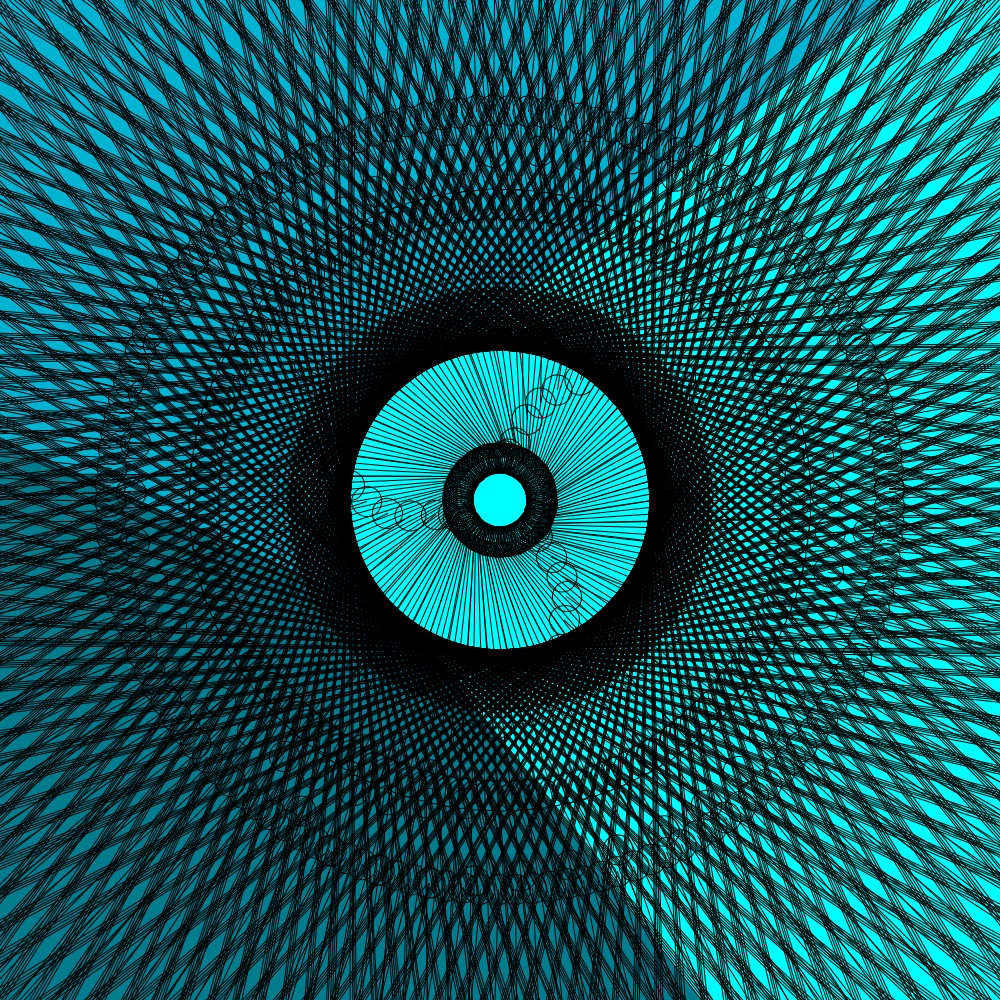
Jacques Gerber: Nightmare, 2014, variable, Processing, Coding in Digital Practices.
Jacques made a three-part generative piece that resembles a beautiful and terrifying recurring nightmare that he has experienced.
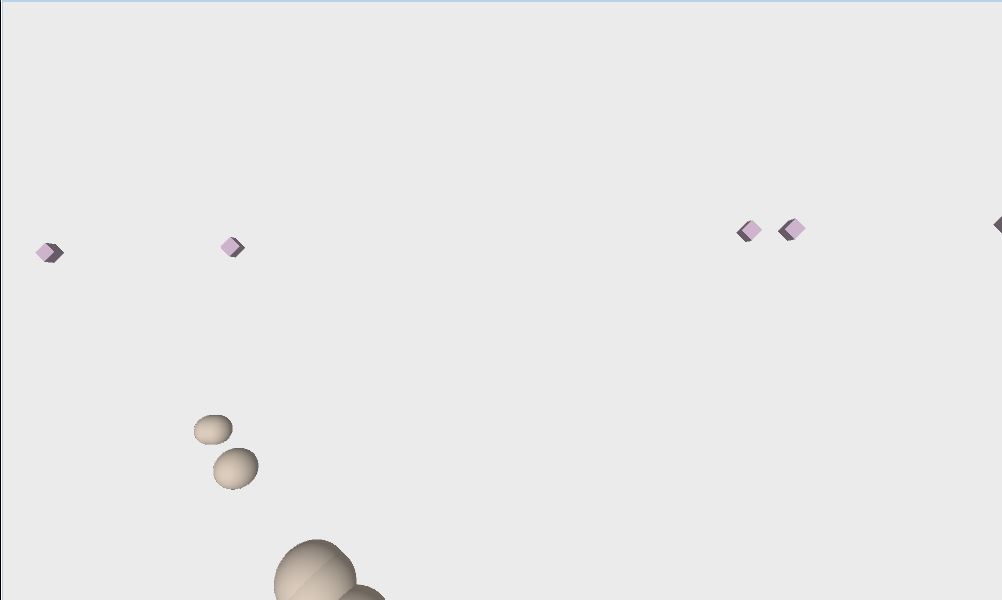
Michael Glantz: The Elements 2014, variable, Processing, Coding in Digital Practices.
Michael’s piece explored earth, wind, fire and water in a 3D processing game.
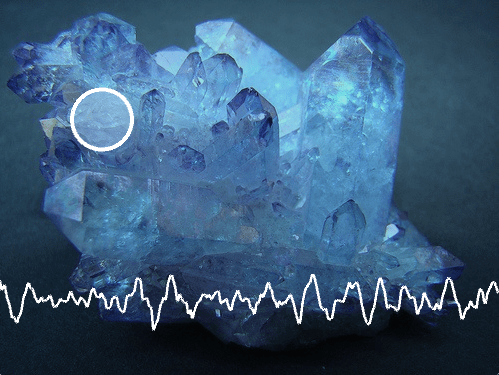 Kirran Kirpalani: Rocks 2014, variable, Processing, Coding in Digital Practices.
Kirran made an interactive environment which gave different audio qualities to different gemstones, based on the user’s mouse position over the gem.

Justine Henderson: Discordia, 2014, variable, Processing, Coding in Digital Practices.
Justine’s game examined the conspiracy theory of the Illuminati.
WEARABLES———————————————————————-
This is an advanced undergraduate and graduate course which provides an introduction to critical wearable art and electronics. Contemporary context will be covered, as well as artists and critical theory relating to wearable art, needle and fabric work. Students will learn basic circuitry, soldering and testing, connections between hard and soft circuits, various sensors and sensor creation, materials for wearable applications and some of their advantages and limitations, various micro controllers, as well as some needlework and how to use a sewing machine.
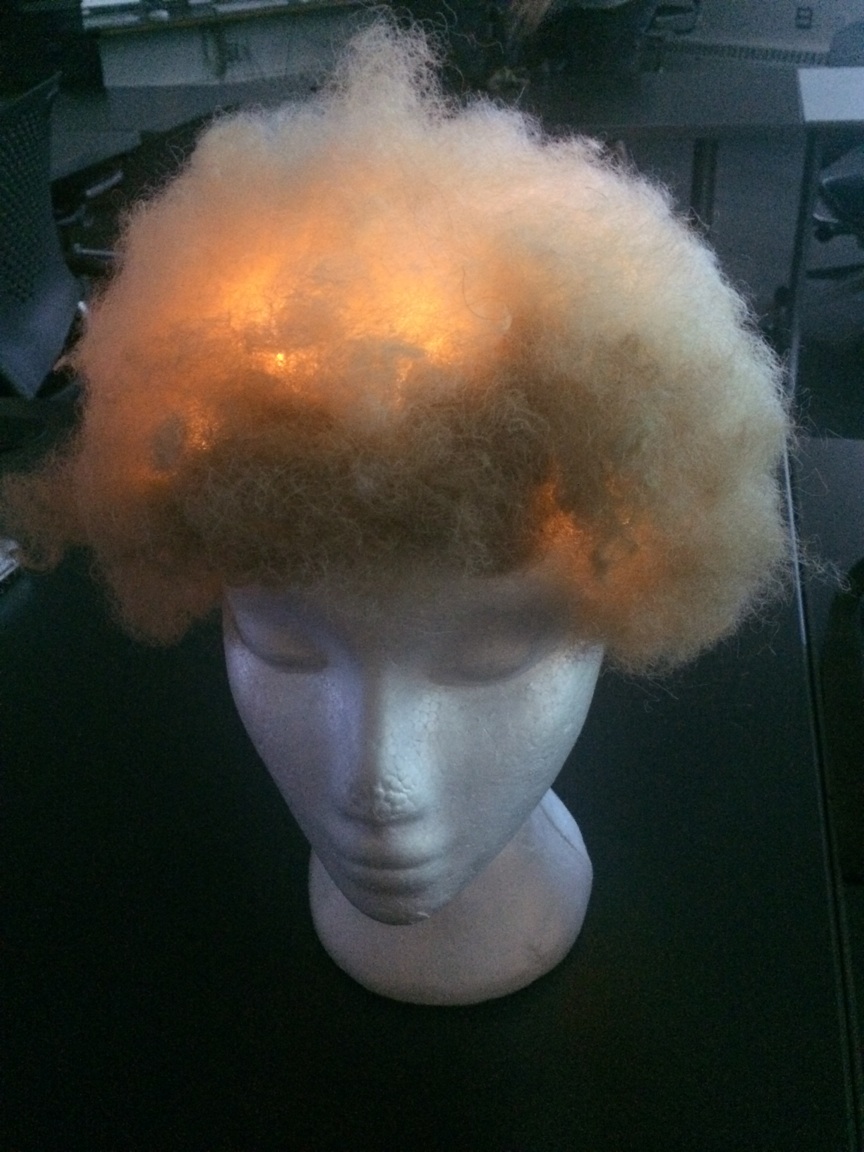
Justine Henderson: Proudly, 2014, 12″ x 12″ x 8″ Wool, electronics, Wearables
I created a wig out of wool. The wearer can decide which color of lights to wear that day, to color their hair without dye. I made the wig for cancer patients, so that they can “have some fun” with their hair choices and to brighten their day. Also, the use of wool is renewable, allows the wearer to stay warm, and is culturally significant.

Chris Bandrowsky: The Glove of Sunshine and Friendship, 2014, 4″ x 8″ x 2″ fabric, electronics, Wearables
My glove was designed to take in different kinds of human hand interaction. Based on the touch, the screen would should a representation of that action. A handshake would display the word “handshake,” and so on with each interaction. To make matters more complex, there was to be several touch sensors on the fingertips, to factor in even more interaction. This disheveled wired look is a happy accident. This also adds a new level of critical analysis to the piece. Where as the glove was to measure human interaction, it was interesting to see the reaction of my peers and colleagues when I asked them to shake my hand while wearing it. Most shook my hand, but nearly everyone remarked that they felt uncomfortable, like it make electrocute someone. The glove itself had become a representation of different kinds of interaction, a new one of reluctance.
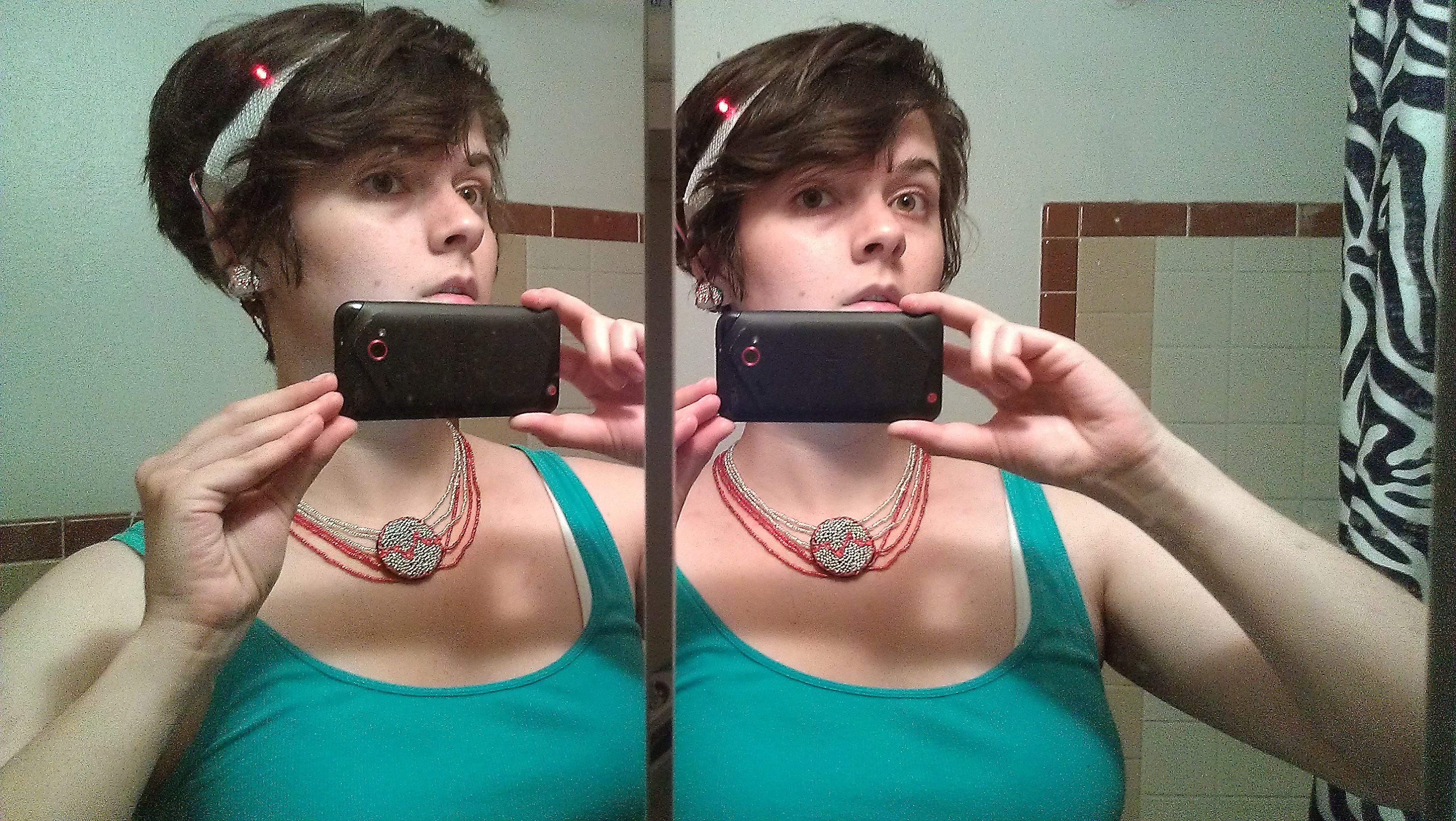
Christine DeCarteret: Beautiful Vulnerability, 2014, 10″ x 16″ x 12″ beads, thread, ribbon, electronics, Wearables
Beautiful Vulnerability is a necklace and headpiece that encourage the wearer to embrace their vulnerabilities by publicly displaying intimate information about the wearer in a beautiful and delicate way.
The necklace plugs into the microcontroller on the headpiece and the earpiece clips on to the wearer’s ear. The headpiece reads the wearer’s pulse through the ear piece and displays the wearer’s heartbeat through the medallion in the center of the necklace. If the wearer’s heart rate goes above 90 BPM, a light on the headpiece will activate and the headpiece will try to calm the wearer down by massaging the wearer’s temple with a small vibrating motor.
The form of Beautiful Vulnerability is beautiful and vulnerable in its own right. All the technological components of the piece are exposed. The conductive thread that makes the whole project work is protected only by a single layer of small glass beads. The color scheme was also chosen to reflect these ideas: Red, the color of blood/the heart, against white, meant to evoke innocence and helplessness.
I myself am prone to panic attacks, which make me feel powerless. It’s alarming when your heart, normally a source of power, feels out of control and renders you fragile. This project was a way of confronting these perceived weaknesses and turning them into something beautiful, honest, and candid.
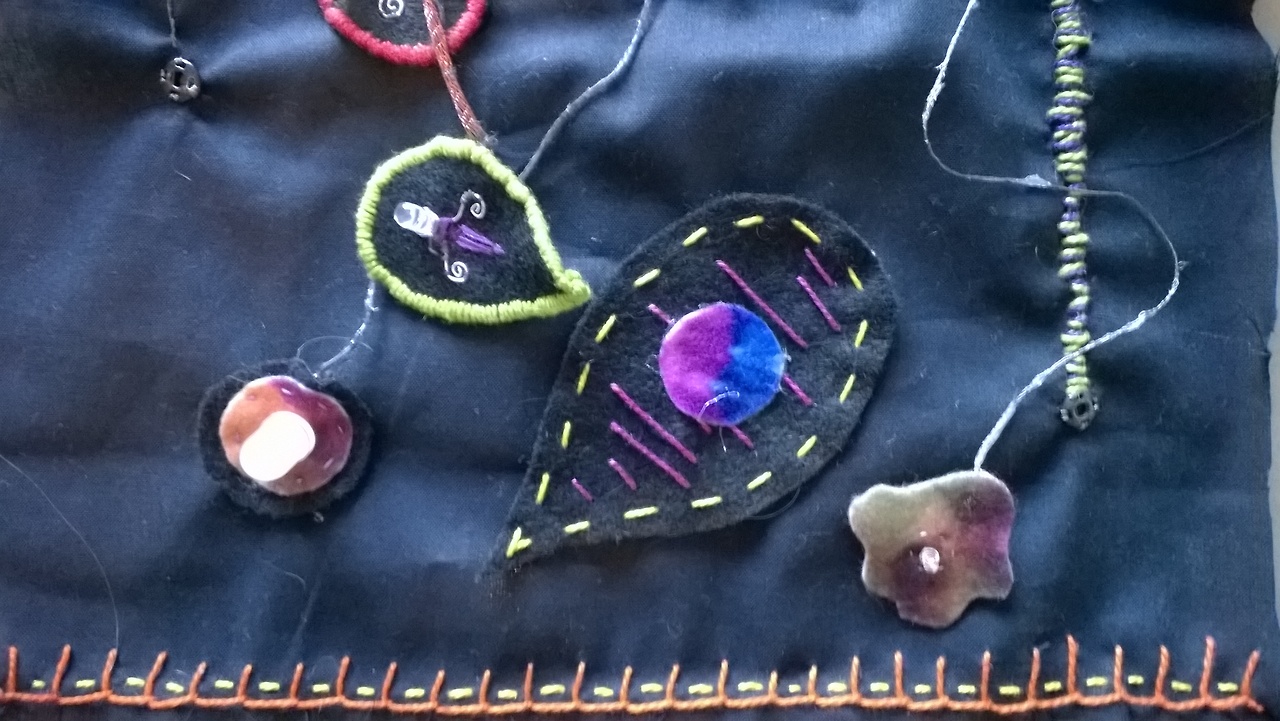
Jenny BC Filipetti: Switchable Embroidery, 2014, 12″ x 10″ x 1″ fabric, electronics, Wearables
In this piece, black snaps are connected to power and silver snaps aren’t, letting the user rearrange form, light, and color as (s)he desires by moving around the small detail pieces and snapping them into place.

Makayla Cappel: My Hug, 2014, 20″ x 26″ x 8″ fabric, electronics, Wearables
Traditionally hugs have been given to show love, appreciation, or kindness towards another individual. Throughout the world people give hugs to and receive hugs from one another every day. Through my piece, My Hug, I wanted to explore the idea of taking an inherently unselfish act and turning it into a selfish one. I have created a vibrating bolero shrug where the circuit connection can only be completed when the outfitted individual joins his or her hands together around the back of the person he/she is hugging. When the hands overlap and create the copper-to-skin connection, it closes the switch thus allowing for the vibration motors to turn on..
Studies have shown that hugs are extremely beneficial for humans. Particularly, they are comparable to getting a massage, because a hug that lasts over 10 seconds will relax your muscles and release tension and stress. In order to enhance this aspect of hugging I have placed the vibration motors on top of the Trapezius muscles so that when My Hug’ connection is made the wearing party is allowing for their personally enhanced hug to take place.
Since people are often not forthcoming about their selfish tendencies, My Hug is constructed so that all of the components are inside the shrug and hidden from the outside. Only the person wearing it knows that they are hugging others for their own benefit.
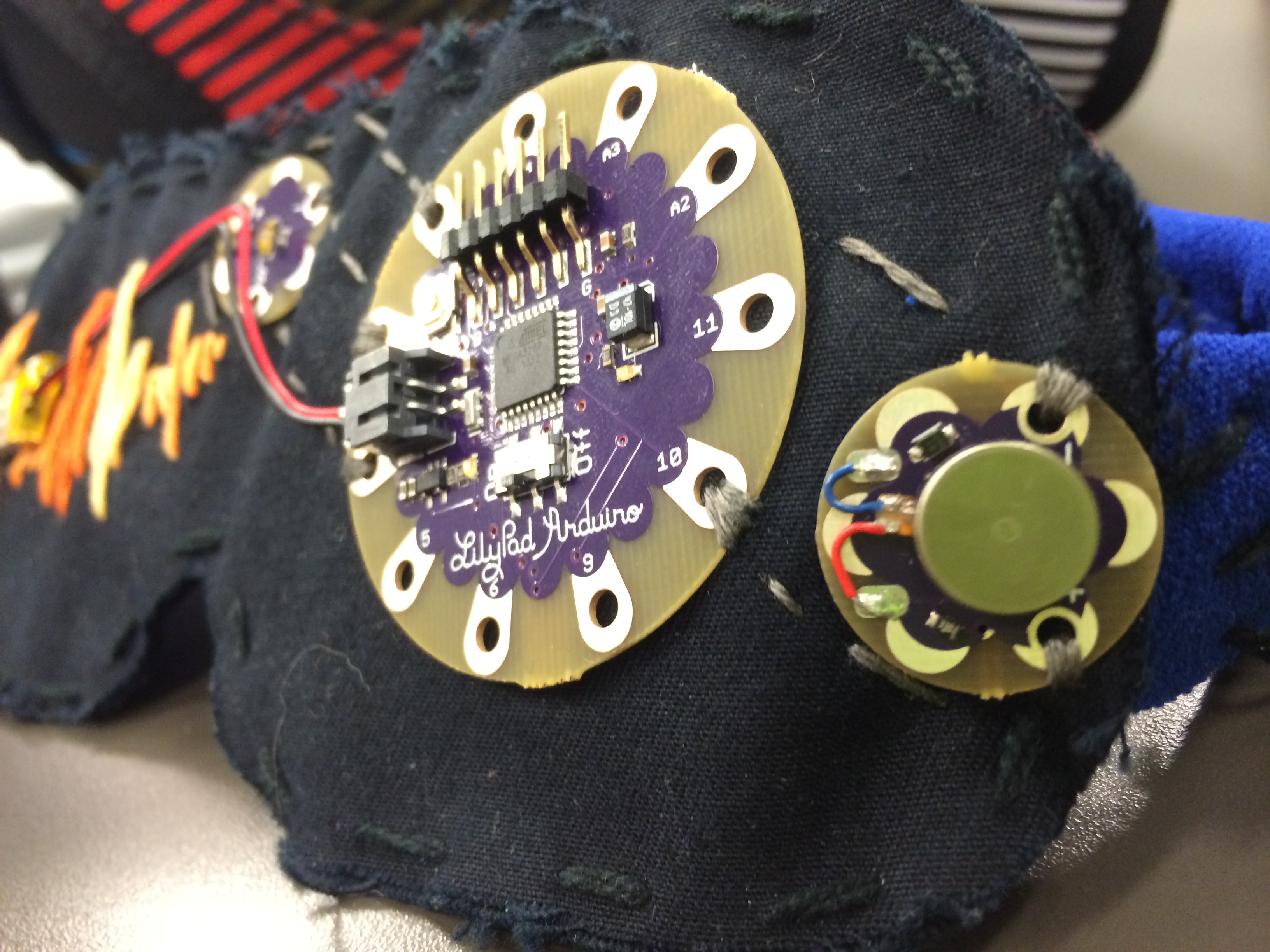 Ross Edfort: Alarm Blindfold, 2014, 8″ x 3″ x 2″ fabric, electronics, Wearables
Hearing impaired people need to use alternative ways to wake them selves up in the morning. Most of the products marketed towards people with this sort of problem are bulky, obtrusive and uncomfortable. They hinder the wearer’s ability to sleep. I wanted to create a comfortable and breathable alternative that has the same effect.
o This project explores a safe and easy way to use wearable tech to wake the deaf
o Vibration motor combined with light sensor
o Takes the forms of a blind fold to play on the reduction of senses
o Using a soft circuit to wire the sensor to the motor to vibrate, calmly waking the wearer.
EMERGENT DIGITAL TOOLS ——————————————————-
This graduate course serves as a primer on the tools essential to expression, sharing, and creation in digital mediums. This includes knowledge of web technologies, creative coding, video, audio, and the basic historical and theoretical contexts of each.
Zoe Doubleday: PROCREATE+, 2014, 16:9, video, Emergent Digital Tools
I created this video to act as a commentary that generates thought and discussion on the bourgeoning market of Ubiquitous Computing. There has been rapid expansion in the realms of both Home Management devices (i.e. Nest, HomeKit, etc.) and Healthcare Management (i.e. the App Store, Facebook, etc.). In this moment in time, our main mode of communication with those around us and with our tech involves focused interaction. I am interested in speculating on how our intensity and method of interaction with those around us will evolve, or devolve, as our technology develops a more managerial role. To illustrate an extreme of devolved interaction, I chose the familiar context of a young couple involved in family planning. What should be an emotional and involved process has been reduced to the transfer of information and automatic responses to a health app’s management. This illustration can be used to further delve into how the role of technology in peoples’ lives shapes their behavior. As Marshall McLuhan stated, “We shape our tools and then our tools shape us.”
Chadwick Friedman: EDP Particle Logo, 2014, 16:9, Processing, Emergent Digital Tools
This Processing Sketch is a particle system that uses ArrayList and PVector to trace text with particles. It develops slowly over time into the Emergent Digital Practices logo. This sketch was made specifically for a vertical 1920×1080 size monitor for the Emergent Digital Practices offices at the University of Denver.
Glenna Xie: The Ultimate Morning Alarm, 2014, 5″ x 2″ x 6″, electronics, Emergent Digital Tools
This is a micro-controller project that I built using Arduino Uno and the Sparkfun Gesture Sensor. When the alarm goes off at a certain time, the piezo buzzer plays Symphony No.5 by Beethoven. To stop the alarm, one has to use the correct gesture pattern.
IMAGING in Emergent Digital Practices———————————————-
This course introduces digital imaging and digital illustration. Foundational technical methods and semiotics are introduced as ways to explore contemporary visual language. Students gain understanding in the digital creation and deciphering of images in 2D space. The essential language and concepts concerning representation and digital reproduction are developed through critical study and making.
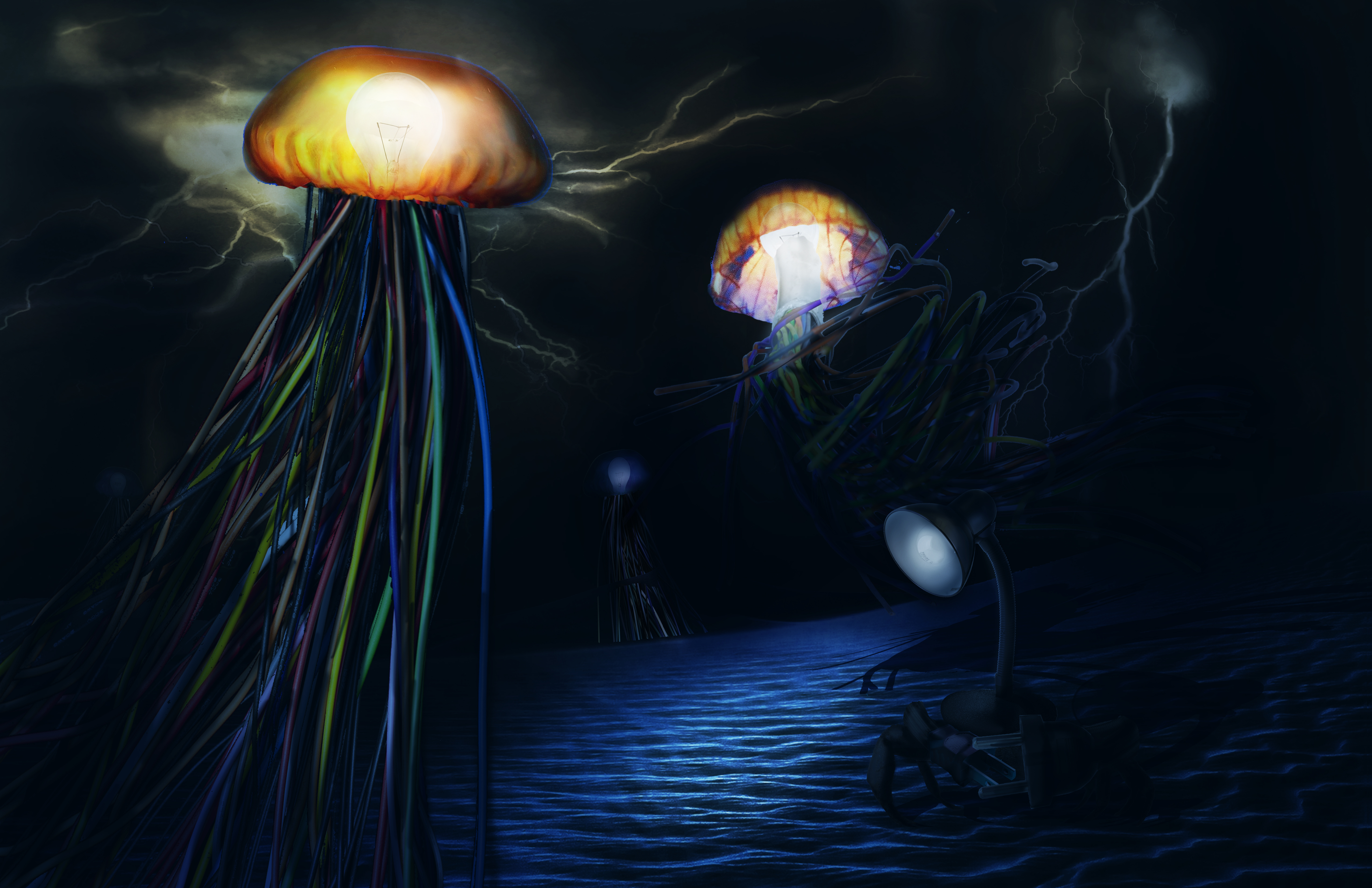
KC Corlett, 2013, 17″ x 11″, raster and vector illustration, Imaging in Digital Practices.
ASSIGNMENT: Create a believable fantastical creature in its “normal” environment. In order to accomplish this, you must pull at least 5 photographic elements (2 mega pixels or greater) together from existing content to create something new and imaginative. One of the elements must be the main component of the piece serving as the backbone that holds the entire creation together. Components from the other assets are then added to it making it the unique form you wish it to be.

Rusty Lemasters, 2013, 17″ x 11″, raster and vector illustration, Imaging in Digital Practices.
ASSIGNMENT: Create a believable fantastical creature in its “normal” environment. In order to accomplish this, you must pull at least 5 photographic elements (2 mega pixels or greater) together from existing content to create something new and imaginative. One of the elements must be the main component of the piece serving as the backbone that holds the entire creation together. Components from the other assets are then added to it making it the unique form you wish it to be.

Gregg Hardie, 2013, 720px x 576px, animated GIF, Imaging in Digital Practices.
ASSIGNMENT: Create an animated GIF that is cyclical using 30 or more frames.

KC Corlett, 2013, 576px x 720px, animated GIF, Imaging in Digital Practices.
ASSIGNMENT: Create an animated GIF that is cyclical using 30 or more frames.

Kelia Murata, 2013, 17″ x 11″, vector illustration, Imaging in Digital Practices.
ASSIGNMENT: Using a complex photo as your inspiration, create a simplified illustration from it by breaking its complex elements into basic forms. Dimension and contrast will be conveyed through the use of two bases tones along with tints and shades that comprise a color palette of not more that 10 total values. Gradients, strokes, and live trace may not be used for this assignment.

Paul Russo, 2013, 11″ x 17″, vector illustration, Imaging in Digital Practices.
ASSIGNMENT: Create a dynamic collage on a 24”x36” art board using raster image and vector illustrations simultaneously. You must have a minimum of 7 unique objects and no more than 21. All should speak to the major focus of your design. Of your objects, half must be masked raster image and the other vector. Of the vectors, only half of them can be manipulated live traces. This project serves as an inquiry into not only creating a dynamic visual display and composition, but also a synthesis of all the skills learned up to this point in time. Do not use images that are ads. Images must allow for remixing.
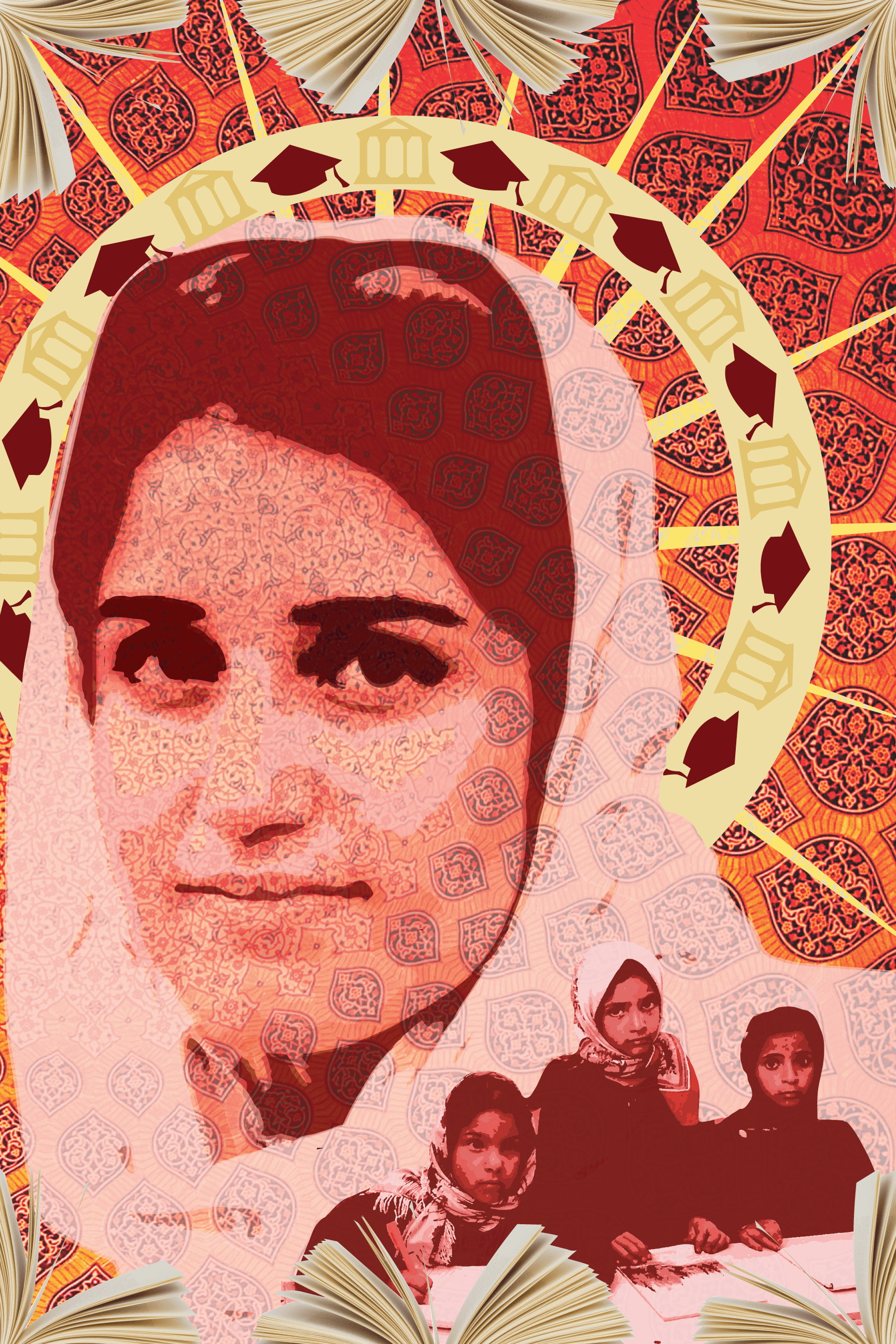
Sommer Shearer, 2013, 11″ x 17″, vector illustration, Imaging in Digital Practices.
ASSIGNMENT: Create a dynamic collage on a 24”x36” art board using raster image and vector illustrations simultaneously. You must have a minimum of 7 unique objects and no more than 21. All should speak to the major focus of your design. Of your objects, half must be masked raster image and the other vector. Of the vectors, only half of them can be manipulated live traces. This project serves as an inquiry into not only creating a dynamic visual display and composition, but also a synthesis of all the skills learned up to this point in time. Do not use images that are ads. Images must allow for remixing.