2015—————————————————————————–


build failure: 2015, 60″ x 36″ x 60″ 3D printed polished ABS plastic, poplar, mesh
pos/neg, which includes build failure and drip structure, uses water as an interactive play between opposites, positive, negative, plus and minus. build failure regenerates interlocking pieces from separate entities to create a framework that inevitably crumbles.

drip structure: 2015, 48″ x 65″ x 16″ 3D printed polished ABS plastic, light/shadows
drip structure creates a dialogue with arrangement, light and shadows of the negative space around a drop of water.
2014——————————————————————————
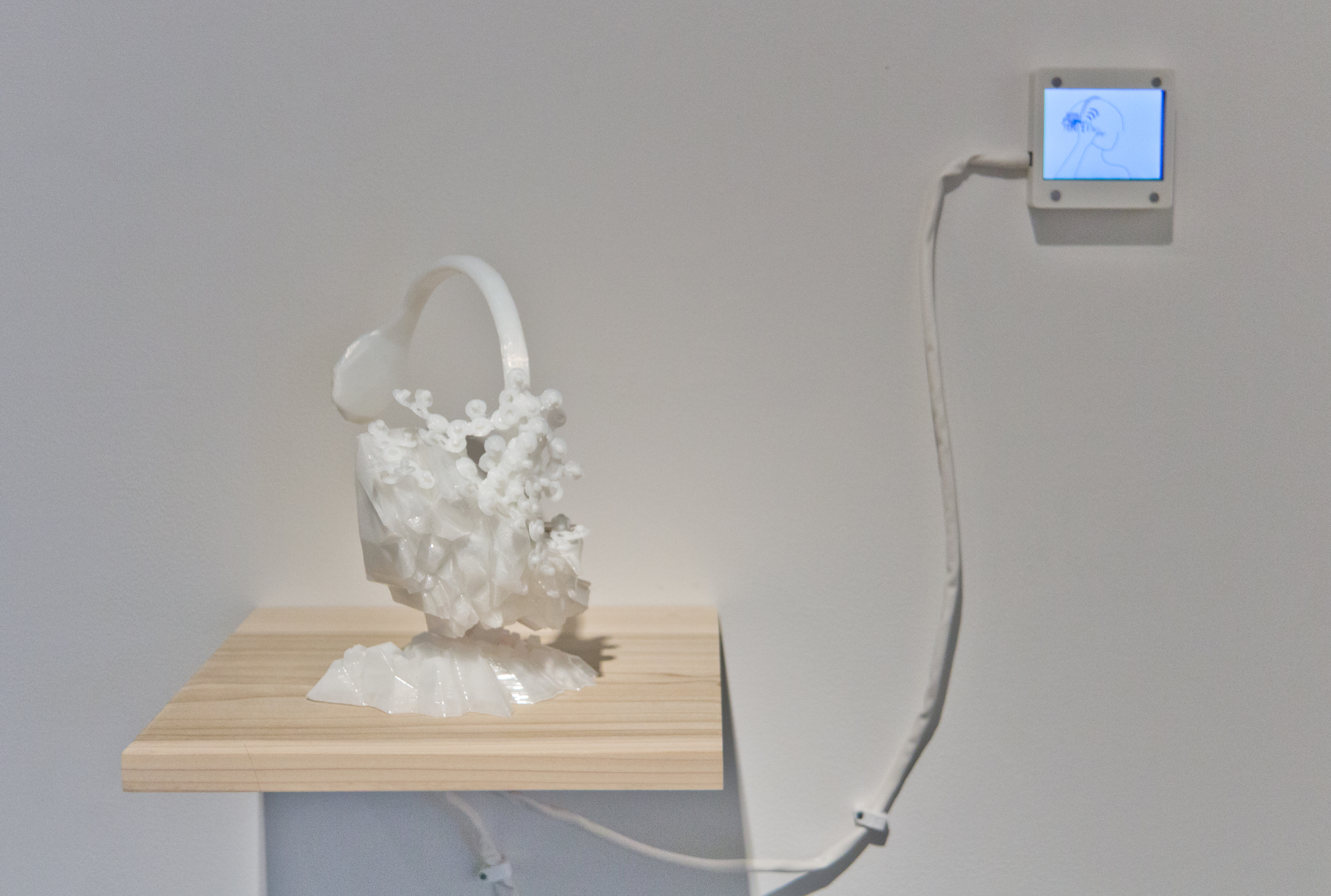

EmotiScan: 2014, 30″ x 65″ x 11″ 3D printed and polished ABS plastic and nylon, poplar, electronics, generative audio
EmotiScan explores how an imagined digital consciousness might try to understand and capture human emotional data, using the Internet as the database. The headpiece uses MRI brain scan audio to create a generative composition that simulates emotion data capture. It needs the user to create a generative audio piece, while the screen invites the user to touch to create digital moiré patterns.
common/myth consists of EmotiScan, SentiHubs, Medi-Topology Reconnaissance Initiative and Imaging Profiler. common/myth explores the transitions between consciousness and universal mythologies: digital consciousness/human consciousness, digital/physical, 2D/3D and mind/emotion/body. Interactive and wearable artworks construct volume through flat profiles, scanning devices record emotion through MRI, and sculptural pieces examine physical and mental connections.
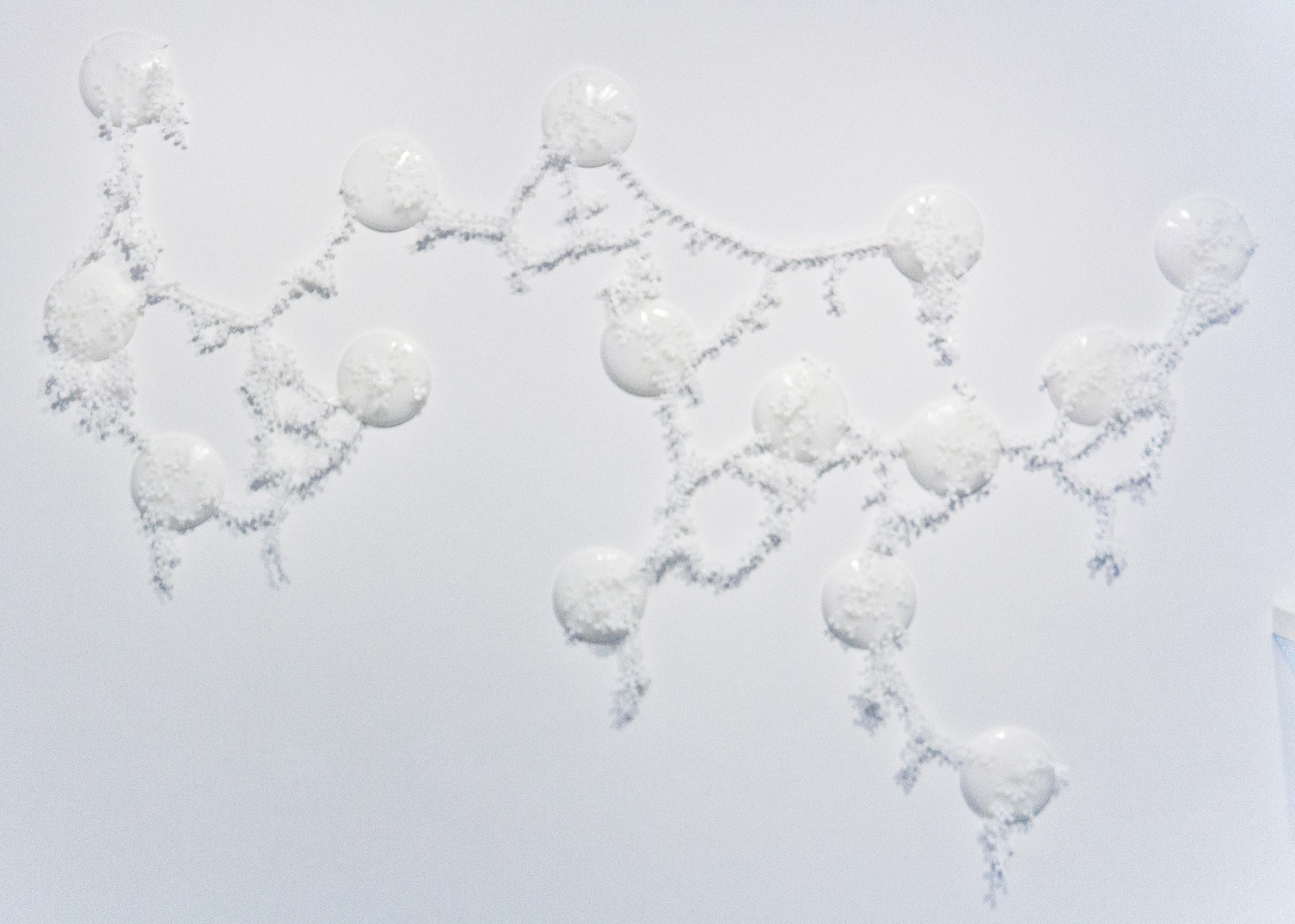
SentiHubs: 2014, variable 10′ x 7′ x 4″ 3D printed and polished ABS plastic and nylon, Twitter emotional keyword mapping data
Twitter based emotional keyword mapping. Looks at the US and maps the happiest emotional keywords on Twitter. Users are invited to “Place a link where they feel is happiest.” for real-time data collection. Grows and changes with each exhibition.
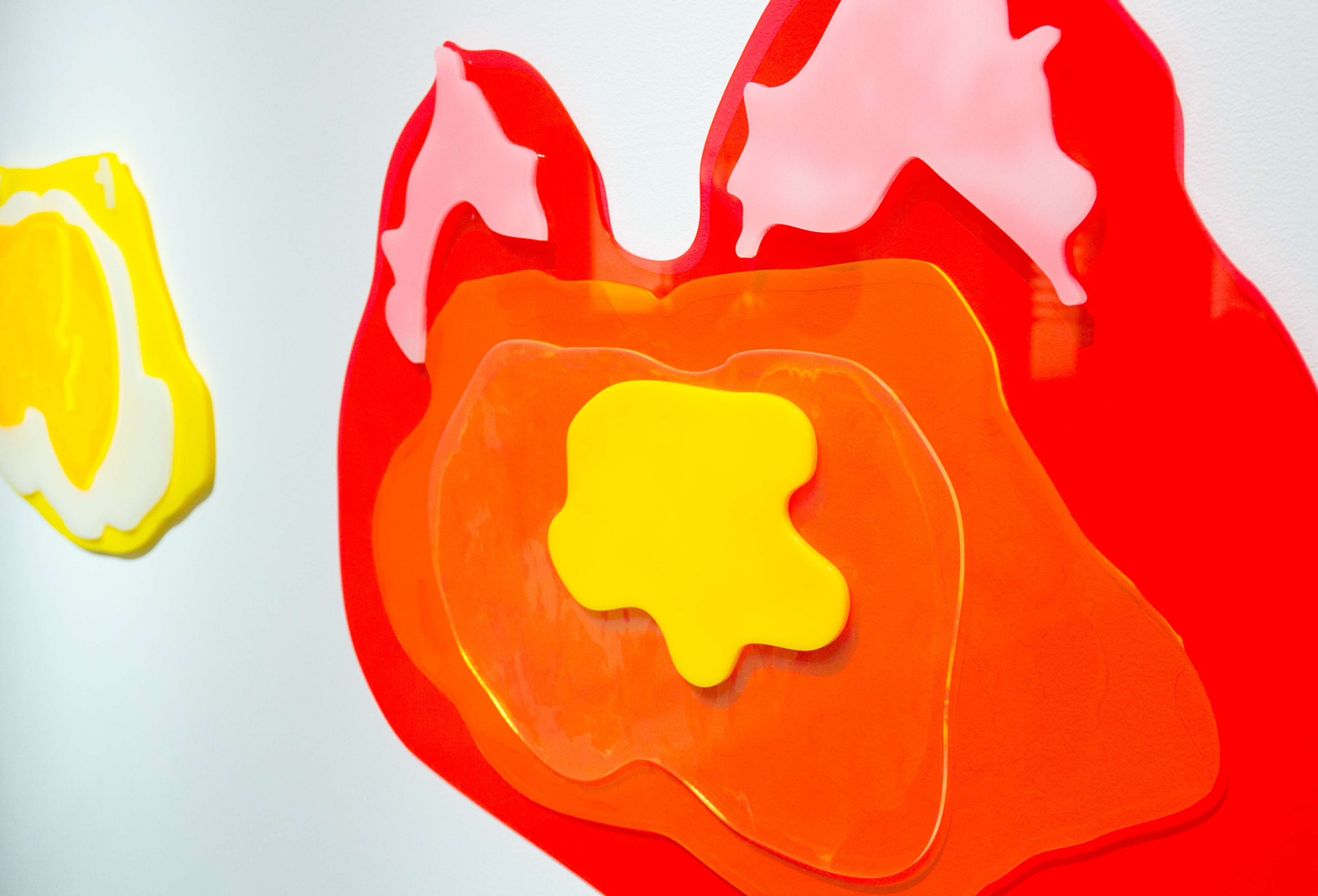
Medi-topology Reconnaissance Initiative (MRI): 2014, 4′ x 8′ x 1″ laser-cut plastic, MRI scans from the Internet
Medi-topology Reconnaissance Initiative (MRI) is a gender-specific dissection of body parts in two-dimensional stacked planes. MRI images, one male and one female, were taken from the Internet of heads, chests, and hips.

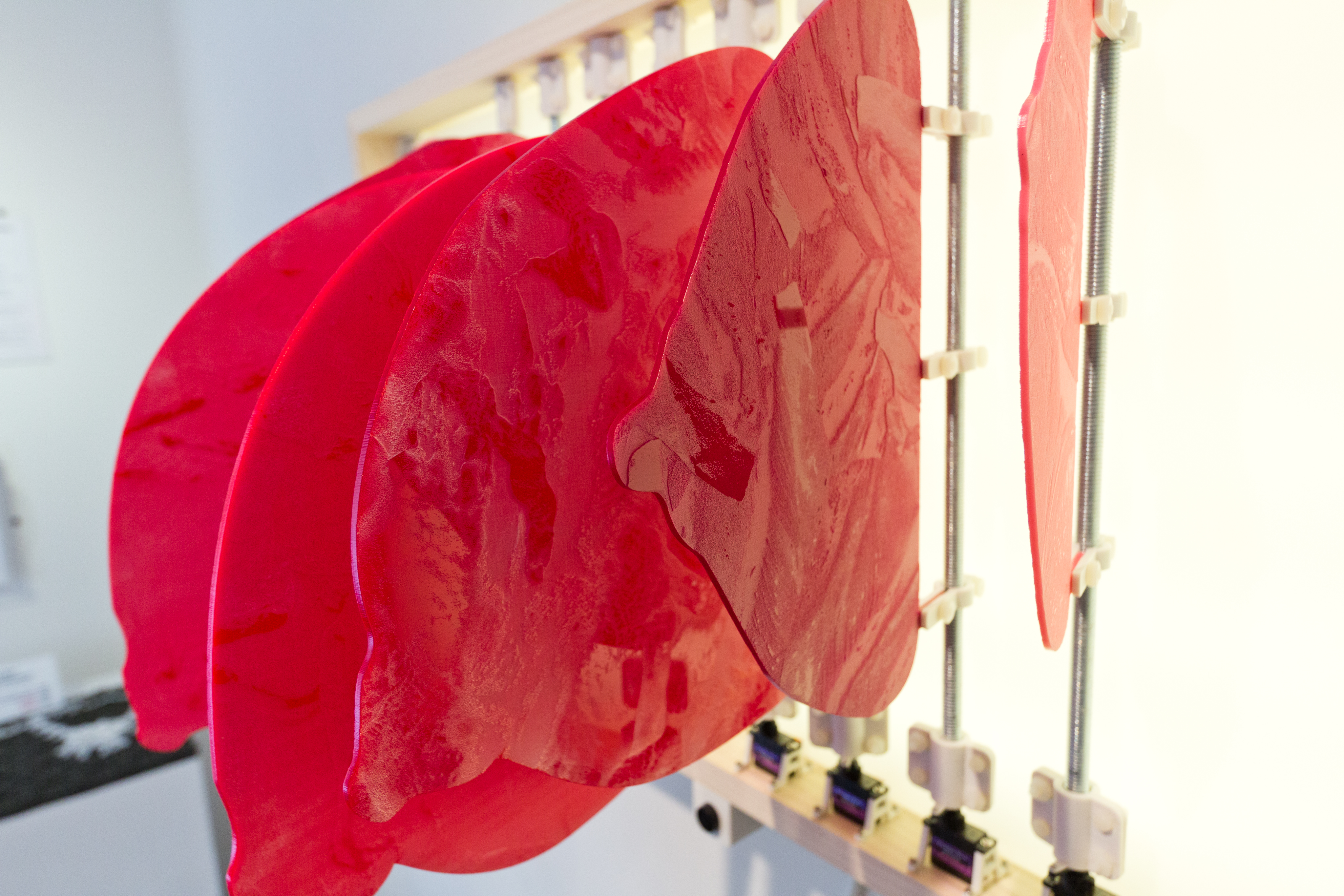
Imaging Profiler: 2014, each 40″ x 65″ x 18″ laser-engraved plastic, 3D printed ABS plastic, metal, poplar, motors, electronics
Proximity-detecting robots that react to motion and explore cultural and technological views of the body, relating to particularly loaded gender-neutral body parts. The viewer interacts with the robots by stepping towards or away from the profilers to create three dimensional space from two dimensional planes.
2013—————————————————————————–
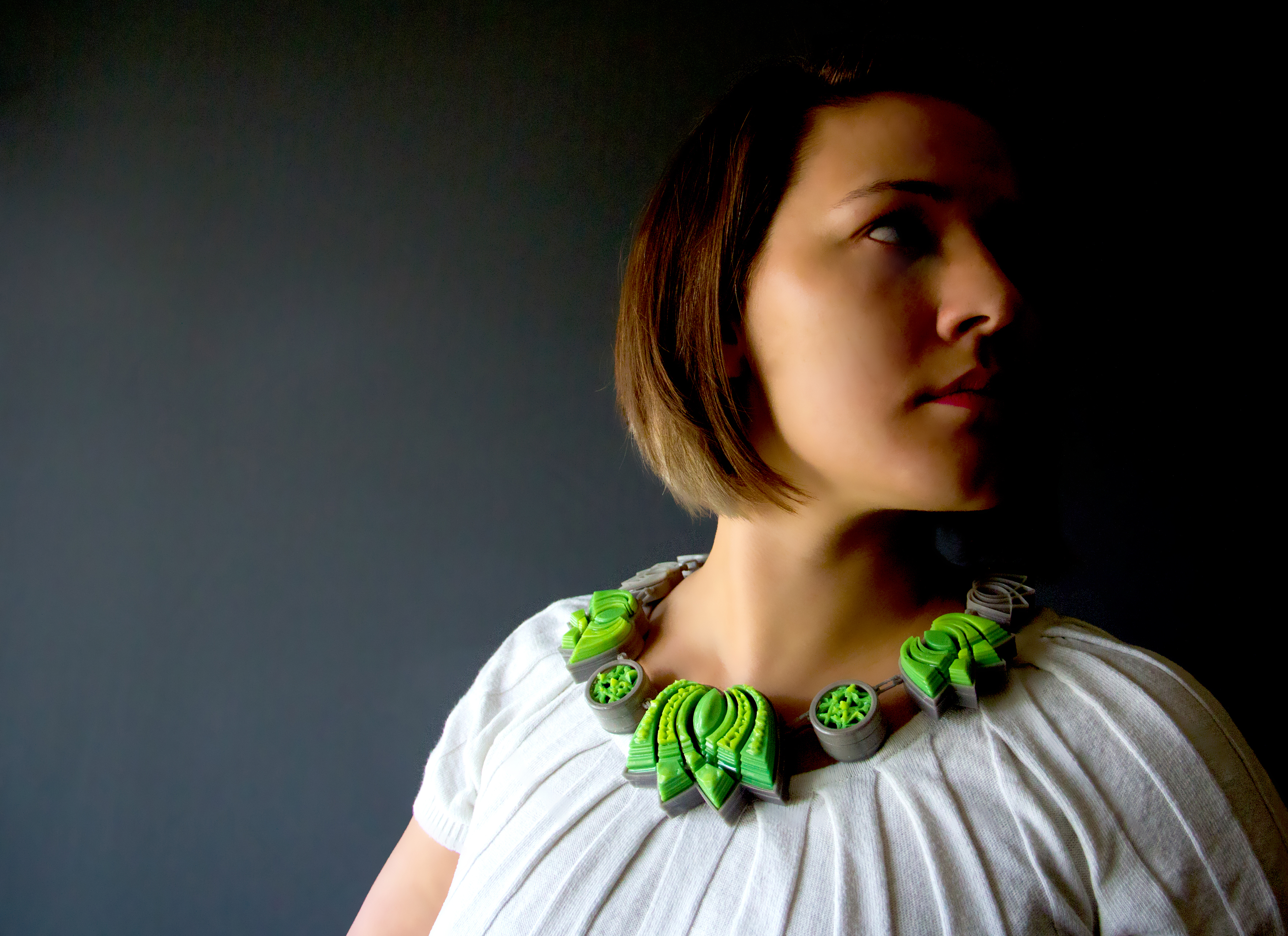
STATEMENT: 2013, 12″ x 14″ x 1.5″ 3D printed ABS polished thermochromatic plastic, audio, electronics
STATEMENT explores the nature of fashion and accessories: what they say about the wearer, the consciousness of the wearer of these statements, fashion protocol and the beauty process and preparation. When the wearer touches the main motif, the necklace makes a statement.

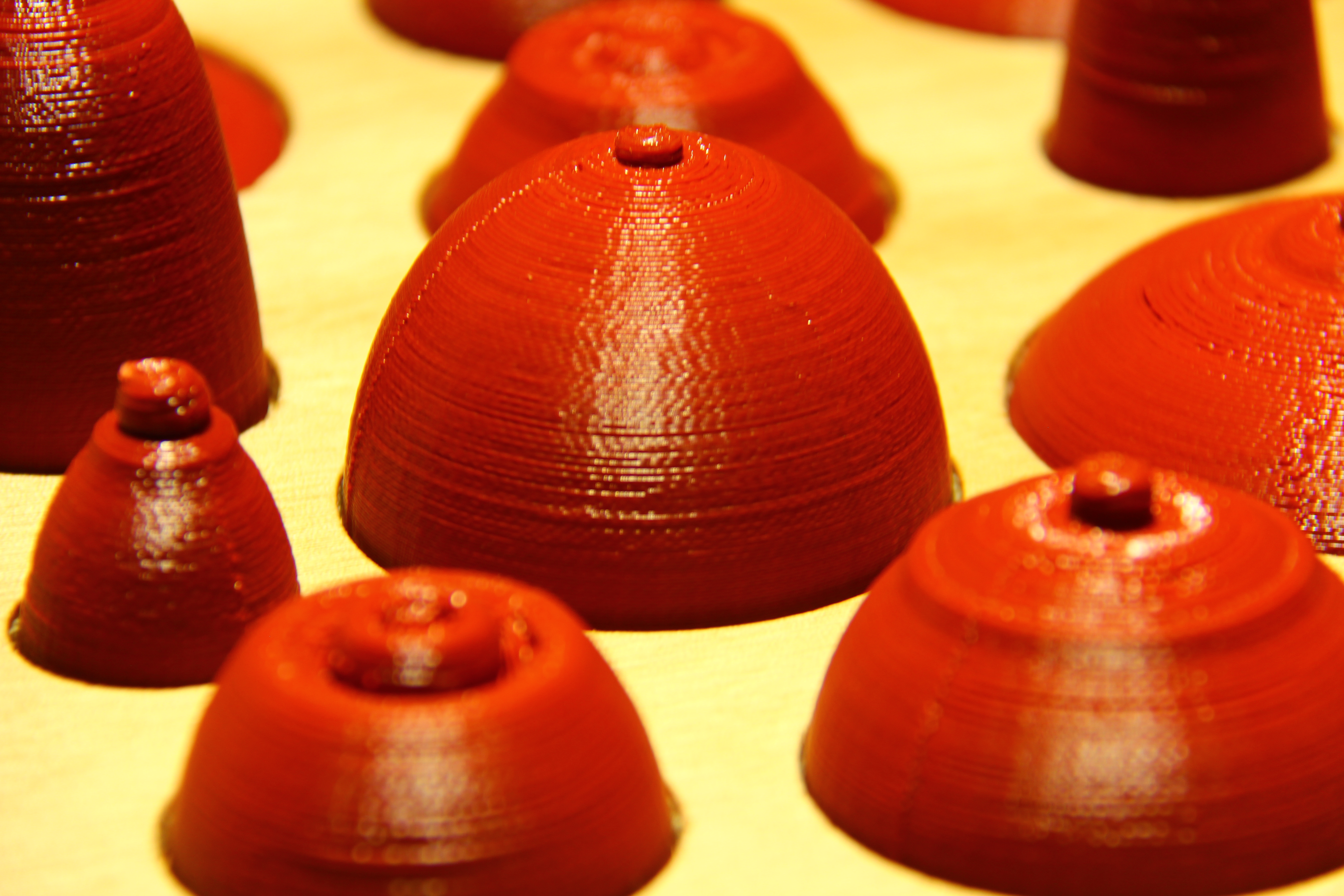
titscape: 2013, 22″ x 48″ x 22″ 3D printed ABS plastic, CNC milled plywood, electronics, audio
titscape is a interactive installation that explores the virtualized body that has been brought into physical space through digital means. Geometrically perfect 3D modeled breasts are printed through imperfect digital means and appear fake and manufactured as a result. Breasts are physical interfaces for feeding infants and also for intimate interaction. The latter mode of physical interaction is often mediated by technology through internet pornography and online sex. I am looking to explore what virtual modes have entered societal physicality and how the game of social interaction becomes interchangeable and uniform despite the plethora of material and vehicles, creating a monotonous landscape.

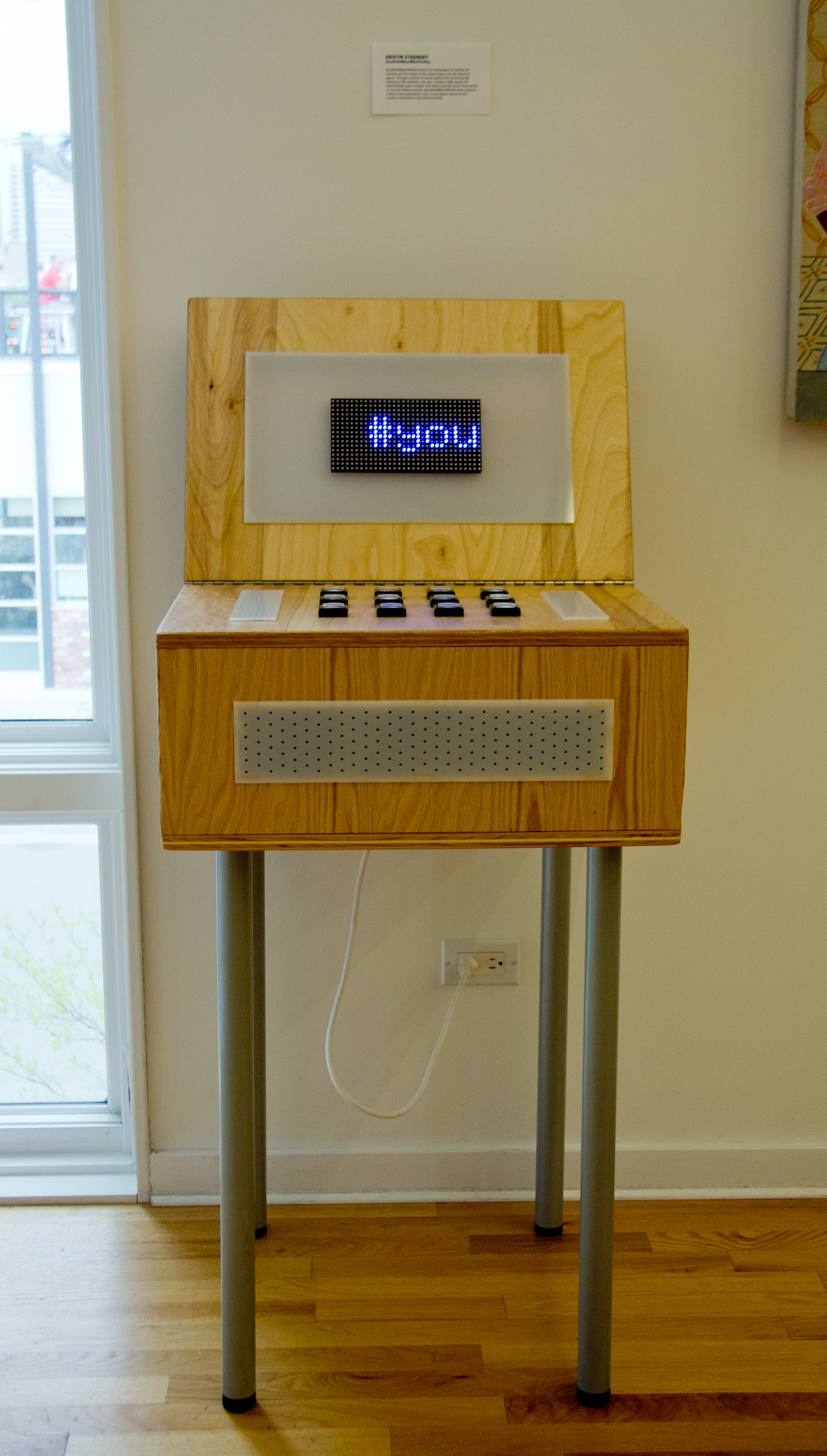
#youDidntMeanWhatYouSay: 2013, 2′ x 50″ x 2′ real-time tweets, wood, electronics, audio
#youDidntMeanWhatYouSay is an exploration of making the internet and the tropes of the virtual space into the physical space. Through creation of visual patterns by activating the buttons on the interface, the user creates a light show and inadvertently spurs a tweet read aloud with the word represented on the last button pressed. The Twitter box explores creation and expression in the virtual sphere and how this creation translates to the physical world.
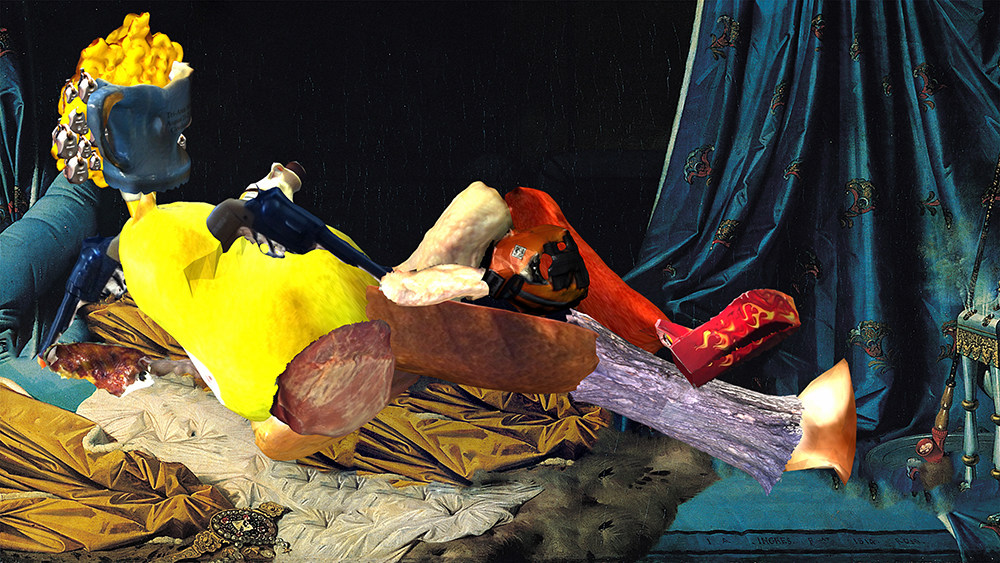
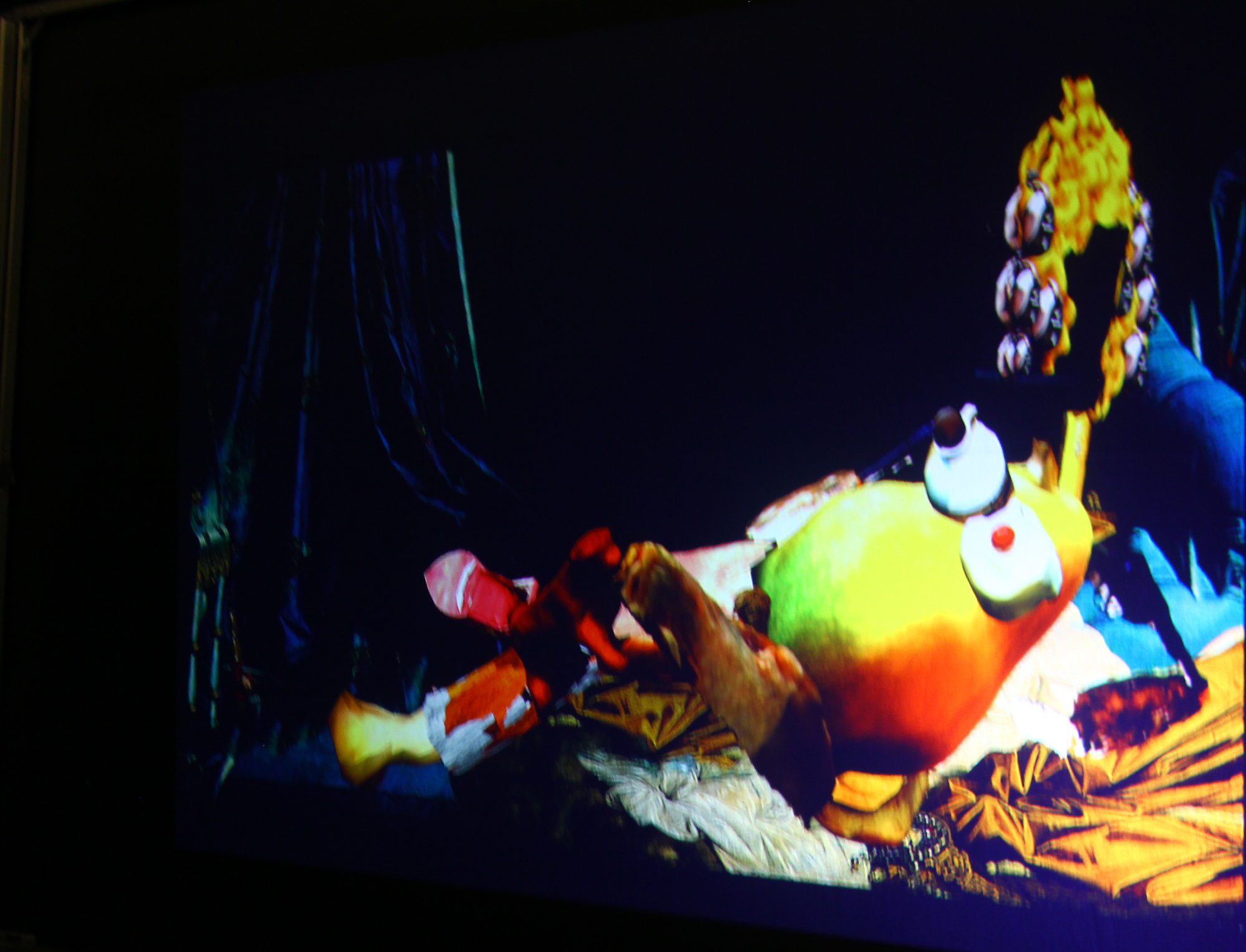
Slang: 2013, variable, 3D scanned objects, projection, 3D printed ABS plastic, image of La Grande Odalisque by Jean Auguste Dominique Ingres
Using slang terms and idioms for body parts and shapes, I am converting these terms and phrases to the scale of the human form in 3D shapes. Each item will be scaled to the part it is representing, not to its physical scale, to create a hybridized literal objectification of the body, its parts and uses. This will then be projected to examine scalability and dimensionality in physical versus digital space and the conventions of Orientalism in the history of painting and art.

SteamCycle: 2013, 6′ x 4′ x 2.5′ 3D printed ABS plastic, CNC milled plywood, bicycle, paint, electronics, sintered nylon. Best in Show USA Pro Challenge Art Bike 2013. In the permanent collection at Denver International Airport. Smaller character modeling by Audrey Seiler.
The bike examines the different states of water as they relate to the natural draws of Steamboat Springs. The hot springs, the name of steamboat, Fish Creek Falls, the Yampa River and of course, champagne powder snow at Steamboat Ski Resort. It also plays with the natural meeting the man-made through digital production methods and the mechanical nature of the bike.
2012——————————————————————————
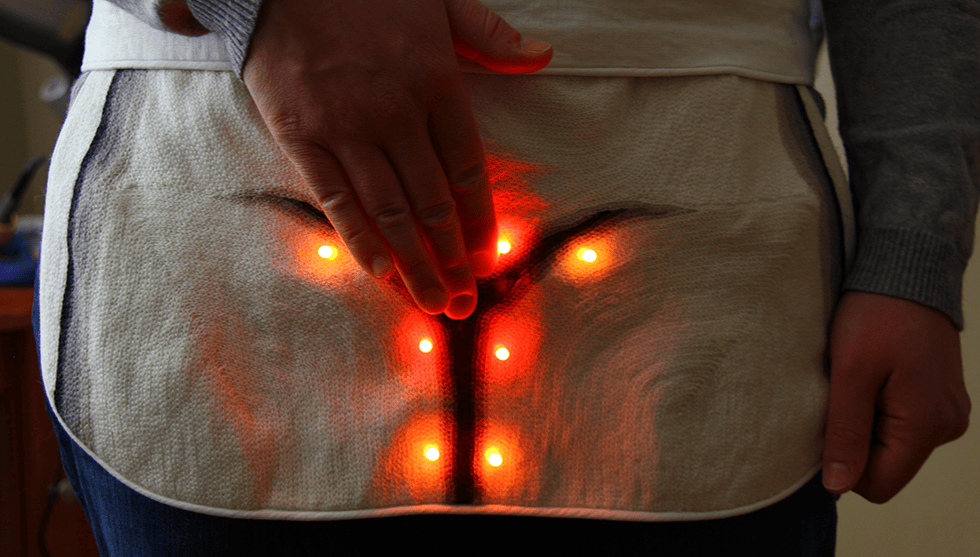
Landing Strip: 2012, 18″ x 14″ x .5″ hand embroidered wool, linen, vibration motors, proximity sensor, electronics
Sewn and crewel embroidered garment that examines physical exposure and personal space. Proximity is detected and the lights change color. If the user is too close, vibration is set off in the crotch area of the garment.
2011——————————————————————————
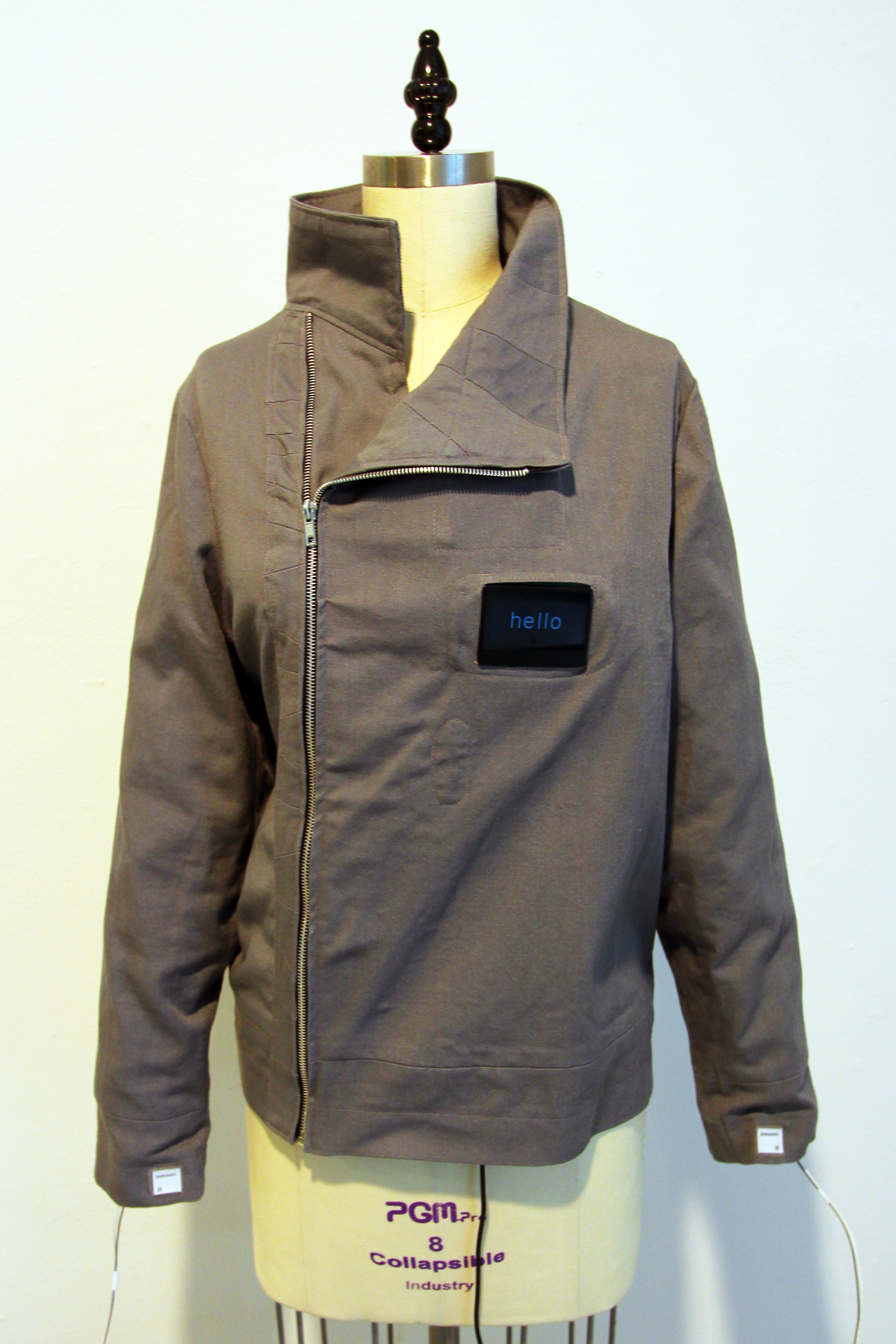
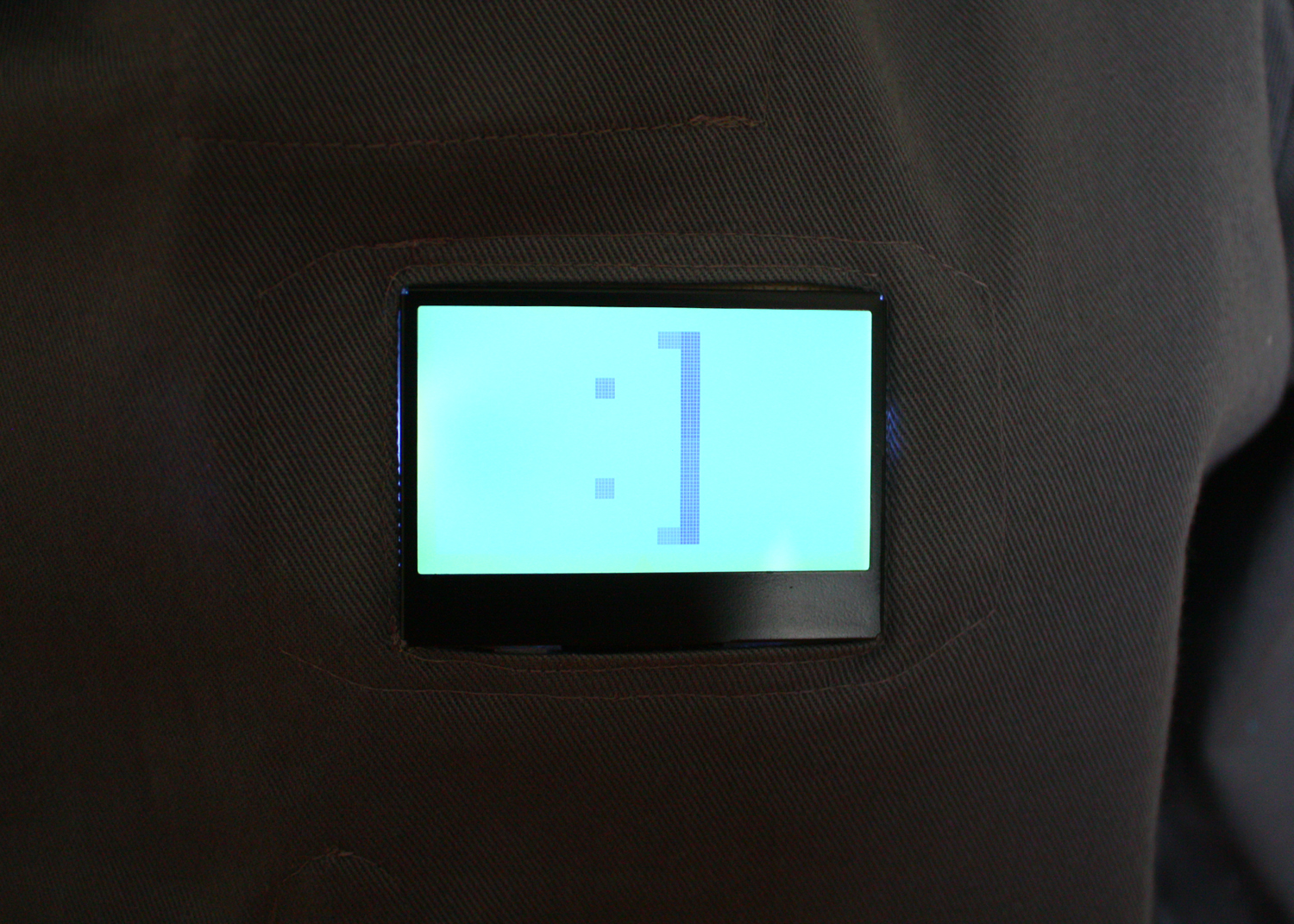
intraInter Socialite: 2011, 28″ x 60″ x 12″ custom jacket, electronics, pressure sensors
The wearable, intraInter socialite creates subtexts for interpersonal human interaction. The wearable is an interactive jacket that has embedded electronics to help the wearer display their emotional state. The user has a limited “keyboard” with force sensors and buttons under soft silicone keys to create computer textual subtitles to human interaction (textual emoticons, ie: :P). The dichotomy between personal interaction that occurs in physical space and that which occurs on a computer or in virtual space is evident and reference IMing, online gaming, texting, email, and other forms of distanced interpersonal interaction. The loss of intonation and body language that occurs at the intersection of computers and textual communication is evident in today’s culture.